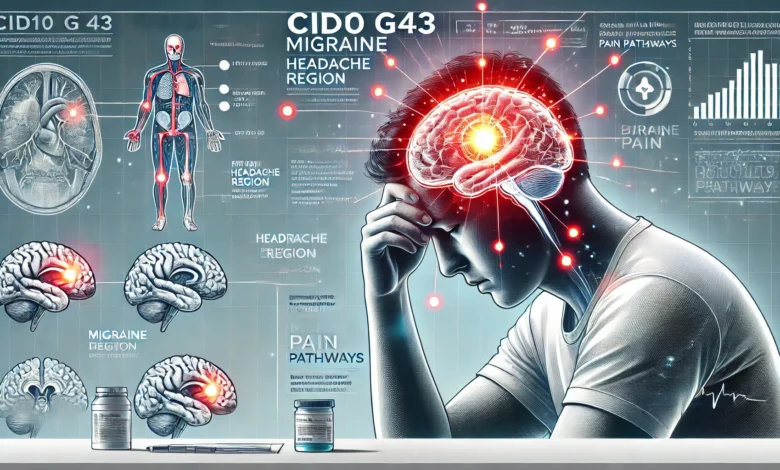
CID10G43: Complete Guide to Understanding This Code
If you’ve come across the term CID10G43, you’re probably curious about its meaning and relevance. Many people see it online and wonder if it is medical, digital, or related to another field. While it may look like a random combination of letters and numbers, it actually has specific uses depending on the context.
In this guide, we will explain everything about CID10G43 in simple, clear language. You will learn its origin, purpose, applications, and how to interpret it safely. I will also provide examples, common questions, and tips for exploring similar codes online.
By the end of this article, you will have a complete understanding of CID10G43, why it matters, and how it fits into larger systems like healthcare, databases, or technology. Let’s dive in.
What Is CID10G43?
CID10G43 is most likely a code used in a structured classification system. In some contexts, it resembles medical coding formats like the ICD-10 system, which categorizes diseases and health conditions.
Codes like CID10G43 help professionals organize, track, and communicate specific conditions efficiently. They act like a shorthand language in clinical, administrative, or research settings.
While it may seem complex, each part of the code carries meaning. Understanding the context of use is key. For example, in medicine, such codes ensure accurate documentation and billing.
Origins of CID10G43
The origin of CID10G43 is linked to classification systems designed to standardize information. Codes like this are common in:
-
Healthcare (ICD-10 or CID systems)
-
Scientific research
-
Data management databases
These systems were created to simplify complex information. Instead of writing long descriptions, professionals use concise codes.
In healthcare, ICD-10 codes were developed by the World Health Organization. Similar CID codes follow the same principle: structure, clarity, and efficiency.
Understanding the Structure of CID10G43
The code CID10G43 is composed of letters and numbers. Typically, letters indicate the category, while numbers define subcategories or specific conditions.
For example, “CID10” may refer to the version or system, and “G43” could specify a precise entry, such as a particular disease type in medical coding.
This systematic approach ensures that every entry has a unique identifier. Professionals worldwide can communicate accurately using these codes.
Applications in Healthcare
If CID10G43 is a medical-related code, it could represent a specific disease, syndrome, or health condition. Such codes are used for:
-
Patient records
-
Insurance claims
-
Research and statistics
-
Hospital administration
Using codes allows healthcare workers to reduce errors. A doctor in one country can understand a patient’s condition even if they speak a different language.
This universality makes classification systems like CID10G43 essential in modern healthcare.
Why People Search for CID10G43
Many people encounter CID10G43 in medical reports, online databases, or research articles. Curiosity naturally follows: what does it mean?
Some searches come from patients looking up their medical documents. Others come from students, professionals, or data enthusiasts exploring coding systems.
Because it looks like a random string, it sparks online interest. People want to understand its context and significance.
Safety and Accuracy Considerations
If you encounter CID10G43 in medical or data settings, verify the source before taking action.
-
Avoid self-diagnosis based on codes alone
-
Consult professionals for interpretation
-
Cross-check databases for accuracy
-
Use official references like ICD or CID manuals
Misinformation can cause confusion. Proper context ensures understanding and safe decisions.
CID10G43 in Research and Data Analysis
Researchers often use structured codes like CID10G43 to study trends. For example, they may analyze:
-
Prevalence of a health condition
-
Treatment outcomes
-
Epidemiological statistics
Data analysis using such codes makes research consistent and comparable across regions and studies.
How to Interpret CID10G43
To interpret CID10G43, consider:
-
The classification system it belongs to
-
The category indicated by letters
-
The specific condition or entry indicated by numbers
Always rely on official documentation. Online sources can vary in accuracy.
Understanding the system helps clarify what the code represents and avoids misinterpretation.
Common Misconceptions
Some myths around CID10G43 include:
-
It is a secret or hidden code
-
It applies only to one country
-
It is related to software viruses
In reality, it is a structured identifier used for documentation and analysis, not a mystery or hazard.
Correct knowledge prevents unnecessary worry or confusion.
Related Codes and Systems
Codes similar to CID10G43 include:
-
ICD-10 codes (International Classification of Diseases)
-
Other CID system entries
-
Database identifiers in research projects
These codes share a systematic approach: letters for categories, numbers for specifics.
Understanding related codes helps contextualize CID10G43 and enhances comprehension.
FAQs About CID10G43
1. What does CID10G43 mean?
It is likely a structured code used in healthcare or data classification systems.
2. Is CID10G43 a disease?
It may represent a specific condition, depending on the classification system.
3. Can I use CID10G43 for personal research?
Yes, but always verify sources and consult professionals when necessary.
4. Where is CID10G43 used?
It appears in medical records, research databases, and data management systems.
5. Is CID10G43 official?
If part of a recognized coding system, yes. Always check official manuals.
6. How can I interpret CID10G43 correctly?
Consider the classification system, the letters, and the numeric subcategory to understand its meaning.
Conclusion: Understanding CID10G43 Safely
The term CID10G43 may seem confusing at first. But it represents a structured, organized identifier in medical or data systems.
It helps professionals communicate, analyze data, and ensure accuracy. Online curiosity is natural, but verified sources are essential.
Learning about CID10G43 shows how codes simplify complex information and maintain global consistency.
Next time you encounter a code like this, you can understand its purpose, context, and relevance. Knowledge brings clarity, reduces confusion, and encourages safe exploration of digital or medical information.
